
Gluco Extend Ingredients: Ten Botanicals, the Doses Studied and What Is Missing
Each ingredient on the order page, what human research tested and at what dose, the safety notes that matter, and the second ingredient list on the vendor's home page.
Two vendor pages, two ingredient lists
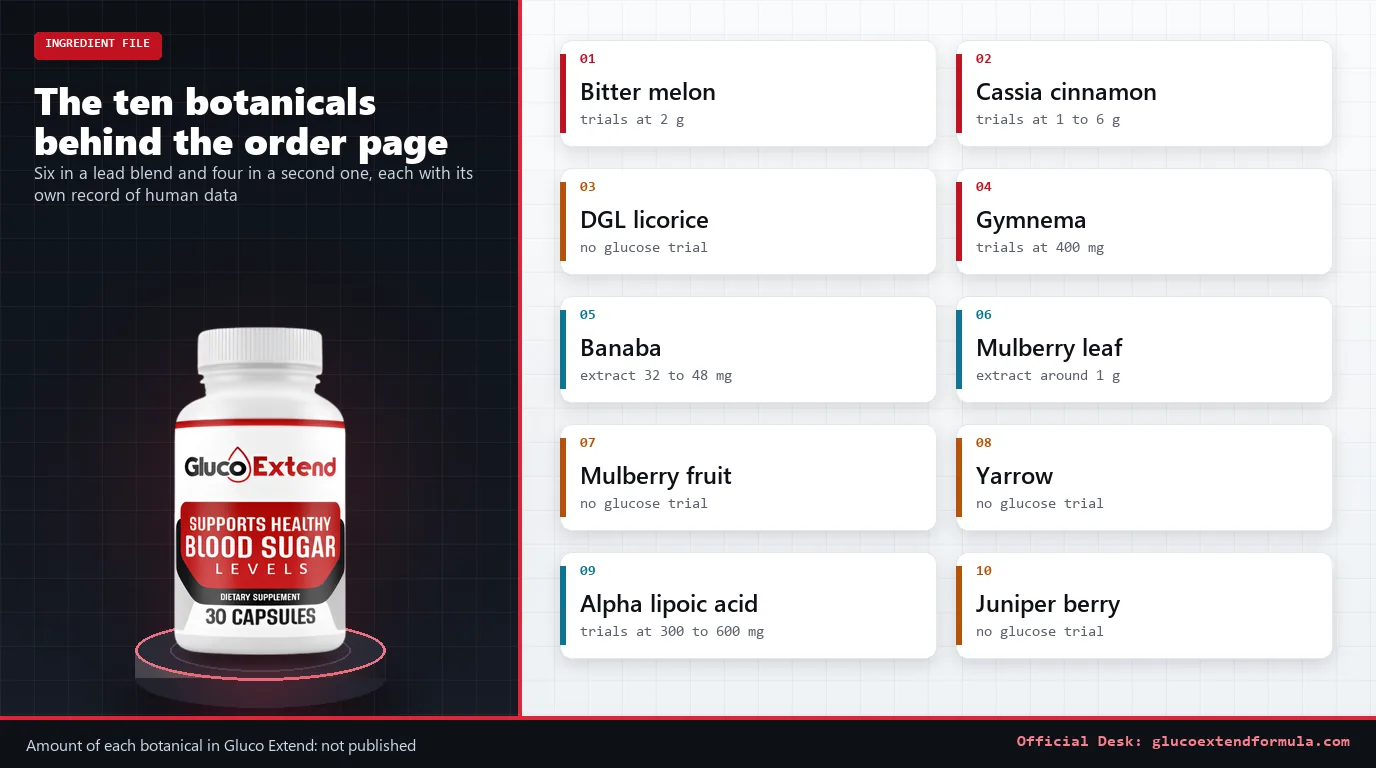
Before looking at any single botanical, it is worth knowing that the vendor does not present one consistent formula. The order page reached through our links, goglucoextend.com/short, shows a "Proprietary Blend of 11+ Plants and Nutrients" with six names and a "Proprietary Blend of 4 Plants and Minerals" with four more. The vendor's home page, goglucoextend.com, uses the same two headings over a different set of names.
| Position | Order page (where you pay) | Home page |
|---|---|---|
| Blend 1, item 1 | Momordica charantia (bitter melon) | Bean extract |
| Blend 1, item 2 | Cinnamomum cassia (cassia cinnamon) | Berberine |
| Blend 1, item 3 | Deglycyrrhizinated licorice | Cocoa |
| Blend 1, item 4 | Gymnema sylvestre | Gymnema |
| Blend 1, item 5 | Lagerstroemia speciosa (banaba) | Leaf extract (unnamed plant) |
| Blend 1, item 6 | Morus spp. (mulberry) | Turmeric |
| Blend 2 | Mulberry fruit, yarrow herb, alpha lipoic acid, juniper berry | Turmeric, gymnema, leaf extract, cocoa |
Every name on both pages carries the same three bullet claims, word for word, which suggests template copy rather than ingredient-specific writing. We treat the order-page list as the working formula because it is attached to the purchase, and we cover the home-page items in their own section. The bottle you receive is the final word: its Supplement Facts panel must list each blend's ingredients in descending order of weight[41].
Bitter melon (Momordica charantia)
Bitter melon is a warty green gourd cooked as a vegetable across South Asia, China and the Caribbean, and one of the most studied folk remedies for high blood sugar. Its fruit and seeds contain charantin (a steroid glycoside mix), polypeptide-p (an insulin-like peptide) and vicine. In laboratory models these compounds increase glucose uptake into cells and affect insulin signaling.
Human evidence is real but thin. A Cochrane review of four randomized trials concluded there was not enough evidence to recommend bitter melon for type 2 diabetes[2]. Two later meta-analyses pooled more studies and found modest reductions in fasting glucose and A1C compared with placebo, while warning that most trials were small, short and of uneven quality[3][4]. The most useful single trial compared 500, 1,000 and 2,000 mg a day of dried fruit powder against 1,000 mg of metformin for four weeks in newly diagnosed patients: only the 2,000 mg dose lowered fructosamine significantly, and its effect was smaller than metformin's[1].
Safety: stomach pain and diarrhea are common at higher intakes. Bitter melon can add to diabetes drugs and cause lows. Its seeds contain vicine, linked to favism-like hemolysis in people with G6PD deficiency, and animal studies suggest uterine effects, so it is avoided in pregnancy[5][6]. Gluco Extend fit: it is listed first, but 2,000 mg will not fit in one capsule; a meaningful amount would need a concentrated extract that the vendor does not describe.
Cassia cinnamon (Cinnamomum cassia)
Cassia is the darker, cheaper cinnamon most Americans buy, as opposed to Ceylon cinnamon (C. verum). Its polyphenols are thought to improve insulin receptor signaling and slow stomach emptying. In healthy volunteers, 6 grams of cinnamon stirred into rice pudding delayed gastric emptying and lowered the after-meal glucose rise[12].
Trials in diabetes are mixed. A 2013 meta-analysis of ten randomized trials covering 543 people, with doses from 120 mg to 6 grams a day, found a statistically significant drop in fasting glucose but no significant change in A1C[7]. A Cochrane review found no clear A1C benefit and called the evidence insufficient[8], and a 2019 meta-analysis that included prediabetes reported small improvements in fasting glucose[11]. The 2003 trial that started the cinnamon interest, 1, 3 or 6 grams a day for 40 days in 60 adults, reported 18 to 29 percent lower fasting glucose[9]; in 2025 its journal attached an Expression of Concern to that paper[10], which is a reason to lean on the meta-analyses instead. NCCIH summarizes cinnamon as not helpful for any health condition on current evidence[15].
Safety: cassia contains coumarin, which can harm the liver at sustained high intake. German risk assessors set a tolerable daily intake of 0.1 mg of coumarin per kilogram of body weight[13][14]. At the fraction of a gram a shared capsule can hold, coumarin from cassia is well below that limit unless the extract is concentrated or you also eat a lot of cassia; people with liver disease or on warfarin should still mention it. Gluco Extend fit: trial doses start at a gram, so this is almost certainly a sub-trial amount.
Gymnema (Gymnema sylvestre)
Gymnema is a woody climber from the forests of India, used in Ayurveda for centuries. Its leaves contain gymnemic acids, which sit in the sweet taste receptor and make sugar taste like sand for up to an hour after the leaf touches the tongue[19]. Lab and animal work suggests further effects on intestinal glucose absorption and on insulin-producing cells.
The best-known human study followed 22 people with type 2 diabetes who added 400 mg a day of a standardized leaf extract (GS4) to their oral drugs for 18 to 20 months; fasting glucose and A1C fell, and some participants reduced or stopped their medication under supervision[16]. A 2021 systematic review and meta-analysis found improvements in fasting and post-meal glucose and A1C, while noting the small, older trial base[17]. A tighter, placebo-controlled study gave 300 mg twice daily for 12 weeks to people with metabolic syndrome and saw lower body weight and VLDL, but no change in insulin sensitivity or secretion[18].
Safety: gymnema adds to diabetes drugs, so lows are possible. A case of drug-induced toxic hepatitis linked to gymnema tea has been published[20]. Gluco Extend fit: gymnema is the one name on both vendor lists. The trial dose of 400 mg of a defined extract would take most of a capsule by itself, and the extract standard is not stated. Swallowed in a capsule, the sweet-blocking taste effect does not occur.
Banaba (Lagerstroemia speciosa)
Banaba is the leaf of the Queen's crape myrtle, a flowering tree in the Philippines and India, traditionally brewed as a tea. Its signature compound is corosolic acid, a triterpene that in lab studies enhances glucose uptake and may inhibit starch-digesting enzymes. Commercial extracts are standardized to a corosolic acid percentage, often 1 or 18 percent.
A small dose-finding study gave 32 or 48 mg a day of an extract standardized to 1 percent corosolic acid, in hard capsules or soft gels, to adults with type 2 diabetes for two weeks; the 48 mg soft-gel group had the largest fall in glucose[21]. In a separate test, a single 10 mg dose of corosolic acid taken before a 75 g glucose drink lowered readings later in the test compared with control[22]. Both studies are short and small, and neither measured A1C.
Safety: mild stomach upset; additive glucose lowering with diabetes drugs. Gluco Extend fit: banaba is the ingredient whose studied dose is small enough to share a capsule with nine others, but that holds only for a standardized extract. Plain leaf powder would contain far less corosolic acid per milligram, and the page does not say which is used.
Mulberry leaf and mulberry fruit (Morus spp.)
Mulberry appears twice in the order-page formula. "Morus spp." in the first blend does not say which part, but leaf is the part studied for glucose. Mulberry leaf contains 1-deoxynojirimycin (DNJ), a sugar-shaped molecule that inhibits alpha-glucosidase, the gut enzyme that splits sucrose and starch; acarbose, a prescription drug, works on the same step.
Of all ten ingredients, mulberry leaf has the most direct after-meal evidence. In 2007, 1 gram of mulberry leaf extract taken with 75 grams of sucrose flattened the glucose rise in people with and without type 2 diabetes and raised breath hydrogen, showing that undigested sugar reached the colon[23]. A food-grade DNJ-enriched powder at 0.8 to 1.2 grams suppressed post-meal glucose and insulin in healthy adults[24], and two randomized, placebo-controlled studies of a standardized extract confirmed lower glucose and insulin responses to sugar or starch[25][26]. A 2023 meta-analysis found the clearest benefit on post-meal measures[27].
Mulberry fruit, the second entry, is a berry rich in sugars and anthocyanin pigments. The page credits it with "healthy digestion"; we found no glucose trials of the fruit. Safety: gas, bloating and loose stools are the expected effects of carbohydrate reaching the colon. Gluco Extend fit: mulberry leaf's effect depends on taking it with the meal, which is why we suggest the capsule at your largest meal; the gram-level doses studied are again far above a capsule share.
Alpha lipoic acid
Alpha lipoic acid (ALA) is a small sulfur-containing compound that the body makes for its mitochondrial enzymes, the machinery that turns glucose into usable energy. It is also an antioxidant that works in both water and fat. Unlike the other nine items, it is a single defined molecule, which makes its dose easy to state; Gluco Extend does not state it.
In an eight-week trial, 300 mg a day lowered fasting glucose and insulin resistance in adults with type 2 diabetes[28], and a 2018 meta-analysis of randomized trials found small but significant improvements in fasting glucose, insulin, insulin resistance and A1C across metabolic conditions[29]. Its strongest use is for nerve symptoms: 600 mg a day by mouth improved neuropathy symptoms over five weeks in the SYDNEY 2 trial[30].
Safety: nausea and heartburn at higher doses. Rarely, ALA triggers insulin autoimmune syndrome, in which antibodies to the body's own insulin cause repeated, sometimes severe, low blood sugar; it has been reported most often in people with particular HLA types and resolves after stopping[31][32]. Gluco Extend fit: trial doses are 300 to 600 mg, again most of a capsule on their own.
DGL licorice, yarrow and juniper berry
DGL licorice. Deglycyrrhizinated licorice is licorice root with most of its glycyrrhizin removed. Glycyrrhizin is the compound that, eaten regularly, raises blood pressure and drains potassium[33]; removing it makes DGL a safer choice, and it is mainly used for heartburn and stomach comfort[34]. We found no human glucose trials of DGL. Its role here is most likely digestive comfort or taste.
Yarrow herb. Achillea millefolium is a feathery-leafed daisy-family plant. European regulators recognize yarrow only for traditional uses such as mild digestive complaints and loss of appetite, not for blood sugar[35]. It can trigger reactions in people allergic to ragweed, chamomile, chrysanthemum or marigold, and is traditionally avoided in pregnancy.
Juniper berry. The blue cone of the common juniper flavors gin and has a long history as a bitter digestive and diuretic. European monographs on juniper preparations cover traditional digestive and urinary uses and advise against use with kidney inflammation and during pregnancy[36]. The order page credits it with "strong antioxidant activity", which is true of many berries and is not a glucose claim.
The home-page list: bean extract, berberine, cocoa, turmeric
If the bottle you receive matches the home-page list rather than the order page, the picture changes, mostly because of berberine.
Berberine is an alkaloid from plants such as barberry and goldenseal, and it is the one ingredient on either list with drug-like glucose effects. In a small three-month trial, 500 mg three times a day performed close to metformin on fasting glucose and A1C[37], and a meta-analysis found benefits on glucose and lipids alongside lifestyle change, with digestive side effects[38]. Berberine also inhibits the liver enzymes CYP2D6, CYP2C9 and CYP3A4, which clear many common drugs[39]. It is not used in pregnancy.
White bean extract, usually Phaseolus vulgaris, blocks alpha-amylase, a starch-digesting enzyme; its evidence is mainly modest weight and fat loss[40]. Cocoa brings flavanols with some vascular data but little glucose evidence at supplement scale. Turmeric is popular for joints and digestion, and the home page credits it with "healthy digestion". The generic "leaf extract" names no plant at all, which means it cannot be evaluated.
Studied doses next to one capsule
Here are the daily amounts used in the human studies above, side by side. One Gluco Extend capsule holds roughly 400 to 800 mg in total, shared by all ten names.
| Ingredient | Studied daily amount | Main result | Fits in a shared capsule? |
|---|---|---|---|
| Bitter melon | 2,000 mg dried fruit | Small fructosamine drop, less than metformin | No |
| Cassia cinnamon | 1 to 6 g | Lower fasting glucose, A1C unclear | No |
| Gymnema (GS4) | 400 mg extract | Lower glucose and A1C over 18 months | Barely, alone |
| Banaba (1% corosolic) | 32 to 48 mg extract | Short-term glucose drop | Yes, if standardized |
| Mulberry leaf | About 1 g extract with a meal | Flatter after-meal curve | No |
| Alpha lipoic acid | 300 to 600 mg | Small glucose and insulin effects | Barely, alone |
| DGL, mulberry fruit, yarrow, juniper | No glucose trials | Traditional or digestive use | Not applicable |
Capsule arithmetic: one capsule, ten names
How to read a proprietary blend
A proprietary blend lets a maker keep individual amounts private, but the law still requires three things on the panel: the blend's name, its total weight per serving, and its ingredients in descending order of predominance by weight[41]. That gives a buyer more to work with than it seems. If blend 1 weighs, say, 450 mg and bitter melon is listed first, bitter melon is at least one-sixth of 450 mg, about 75 mg, and the last item could be a few milligrams.
Look also for extract descriptors such as "4:1 extract", "standardized to 1% corosolic acid" or "DNJ 1%". These tell you whether the milligrams are raw powder or concentrated material, which can change their meaning tenfold. Their absence is not proof of a weak product, but it removes your ability to compare with research. When the bottle arrives, copy the blend weights and order onto our label worksheet, and use the arithmetic above to see what the numbers can and cannot support.
Questions on this topic
What is the main ingredient in Gluco Extend?
On the order page, bitter melon is listed first in the lead blend, which by labeling rules would make it the largest share of that blend if the list is in order of weight. Without published weights, no ingredient can be called the main one with certainty.
Does Gluco Extend contain berberine?
The order page does not list berberine; the vendor's home page does. Check the side panel of the bottle you receive. If berberine is on it, ask a pharmacist about interactions, because berberine slows the clearance of many common drugs.
Is the cinnamon in Gluco Extend safe for the liver?
At the small amount one shared capsule can hold, the coumarin from cassia cinnamon should be well below the tolerable daily intake. People with liver disease, or who also eat large amounts of cassia, should still mention it to their doctor.
Does Gluco Extend contain chromium?
No chromium is listed on either vendor page, even though the second blend is headed 'Plants and Minerals'. None of the ten order-page names is a mineral.
Which Gluco Extend ingredient has the best evidence?
For the after-meal rise, mulberry leaf extract; for longer-term glucose markers, gymnema and bitter melon have the most trials. All of those trials used doses larger than a share of one capsule.
Records cited on this page
Every link opens the original record. The trials tested single botanicals at stated doses and preparations; none tested the Gluco Extend capsule, whose amounts are not published.
- 1Fuangchan A, Sonthisombat P, Seubnukarn T, et al. Hypoglycemic effect of bitter melon compared with metformin in newly diagnosed type 2 diabetes patients. J Ethnopharmacol. 2011;134(2):422-428. pubmed.ncbi.nlm.nih.gov/21211558/
- 2Ooi CP, Yassin Z, Hamid TA. Momordica charantia for type 2 diabetes mellitus. Cochrane Database Syst Rev. 2012;(8):CD007845. pubmed.ncbi.nlm.nih.gov/22895968/
- 3Peter EL, Kasali FM, Deyno S, et al. Momordica charantia L. lowers elevated glycaemia in type 2 diabetes mellitus patients: systematic review and meta-analysis. J Ethnopharmacol. 2019;231:311-324. pubmed.ncbi.nlm.nih.gov/30385422/
- 4Zhang X, Zhao Y, Song Y, et al. Effects of Momordica charantia L. supplementation on glycemic control and lipid profile in type 2 diabetes mellitus patients: a systematic review and meta-analysis of randomized controlled trials. Heliyon. 2024;10(10):e31126. pubmed.ncbi.nlm.nih.gov/38784554/
- 5Basch E, Gabardi S, Ulbricht C. Bitter melon (Momordica charantia): a review of efficacy and safety. Am J Health Syst Pharm. 2003;60(4):356-359. pubmed.ncbi.nlm.nih.gov/12625217/
- 6Memorial Sloan Kettering Cancer Center, About Herbs. Bitter Melon. www.mskcc.org/cancer-care/integrative-medicine/herbs/bitter-melon
- 7Allen RW, Schwartzman E, Baker WL, Coleman CI, Phung OJ. Cinnamon use in type 2 diabetes: an updated systematic review and meta-analysis. Ann Fam Med. 2013;11(5):452-459. pubmed.ncbi.nlm.nih.gov/24019277/
- 8Leach MJ, Kumar S. Cinnamon for diabetes mellitus. Cochrane Database Syst Rev. 2012;(9):CD007170. pubmed.ncbi.nlm.nih.gov/22972104/
- 9Khan A, Safdar M, Ali Khan MM, Khattak KN, Anderson RA. Cinnamon improves glucose and lipids of people with type 2 diabetes. Diabetes Care. 2003;26(12):3215-3218. pubmed.ncbi.nlm.nih.gov/14633804/
- 10American Diabetes Association. Expression of Concern: Khan A, et al. Cinnamon improves glucose and lipids of people with type 2 diabetes. Diabetes Care 2003;26:3215-3218. Diabetes Care. 2025;48(9):1646. pubmed.ncbi.nlm.nih.gov/40834253/
- 11Deyno S, Eneyew K, Seyfe S, et al. Efficacy and safety of cinnamon in type 2 diabetes mellitus and pre-diabetes patients: a meta-analysis and meta-regression. Diabetes Res Clin Pract. 2019;156:107815. pubmed.ncbi.nlm.nih.gov/31425768/
- 12Hlebowicz J, Darwiche G, Björgell O, Almér LO. Effect of cinnamon on postprandial blood glucose, gastric emptying, and satiety in healthy subjects. Am J Clin Nutr. 2007;85(6):1552-1556. pubmed.ncbi.nlm.nih.gov/17556692/
- 13Abraham K, Wöhrlin F, Lindtner O, Heinemeyer G, Lampen A. Toxicology and risk assessment of coumarin: focus on human data. Mol Nutr Food Res. 2010;54(2):228-239. pubmed.ncbi.nlm.nih.gov/20024932/
- 14German Federal Institute for Risk Assessment (BfR). Frequently asked questions about coumarin in cinnamon and other foods. www.bfr.bund.de/en/frequently_asked_questions_about_coumarin_in_cinnamon_and_other_foods-8487.html
- 15National Center for Complementary and Integrative Health. Cinnamon. www.nccih.nih.gov/health/cinnamon
- 16Baskaran K, Kizar Ahamath B, Radha Shanmugasundaram K, Shanmugasundaram ER. Antidiabetic effect of a leaf extract from Gymnema sylvestre in non-insulin-dependent diabetes mellitus patients. J Ethnopharmacol. 1990;30(3):295-300. pubmed.ncbi.nlm.nih.gov/2259217/
- 17Devangan S, Varghese B, Johny E, et al. The effect of Gymnema sylvestre supplementation on glycemic control in type 2 diabetes patients: a systematic review and meta-analysis. Phytother Res. 2021;35(12):6802-6812. pubmed.ncbi.nlm.nih.gov/34467577/
- 18Zuñiga LY, González-Ortiz M, Martínez-Abundis E. Effect of Gymnema sylvestre administration on metabolic syndrome, insulin sensitivity, and insulin secretion. J Med Food. 2017;20(8):750-754. pubmed.ncbi.nlm.nih.gov/28459647/
- 19Kanetkar P, Singhal R, Kamat M. Gymnema sylvestre: a memoir. J Clin Biochem Nutr. 2007;41(2):77-81. pubmed.ncbi.nlm.nih.gov/18193099/
- 20Shiyovich A, Sztarkier I, Nesher L. Toxic hepatitis induced by Gymnema sylvestre, a natural remedy for type 2 diabetes mellitus. Am J Med Sci. 2010;340(6):514-517. pubmed.ncbi.nlm.nih.gov/20856101/
- 21Judy WV, Hari SP, Stogsdill WW, et al. Antidiabetic activity of a standardized extract (Glucosol) from Lagerstroemia speciosa leaves in Type II diabetics. A dose-dependence study. J Ethnopharmacol. 2003;87(1):115-117. pubmed.ncbi.nlm.nih.gov/12787964/
- 22Fukushima M, Matsuyama F, Ueda N, et al. Effect of corosolic acid on postchallenge plasma glucose levels. Diabetes Res Clin Pract. 2006;73(2):174-177. pubmed.ncbi.nlm.nih.gov/16549220/
- 23Mudra M, Ercan-Fang N, Zhong L, Furne J, Levitt M. Influence of mulberry leaf extract on the blood glucose and breath hydrogen response to ingestion of 75 g sucrose by type 2 diabetic and control subjects. Diabetes Care. 2007;30(5):1272-1274. pubmed.ncbi.nlm.nih.gov/17303787/
- 24Kimura T, Nakagawa K, Kubota H, et al. Food-grade mulberry powder enriched with 1-deoxynojirimycin suppresses the elevation of postprandial blood glucose in humans. J Agric Food Chem. 2007;55(14):5869-5874. pubmed.ncbi.nlm.nih.gov/17555327/
- 25Lown M, Fuller R, Lightowler H, et al. Mulberry-extract improves glucose tolerance and decreases insulin concentrations in normoglycaemic adults: results of a randomised double-blind placebo-controlled study. PLoS One. 2017;12(2):e0172239. pubmed.ncbi.nlm.nih.gov/28225835/
- 26Thondre PS, Lightowler H, Ahlstrom L, Gallagher A. Mulberry leaf extract improves glycaemic response and insulaemic response to sucrose in healthy subjects: results of a randomized, double blind, placebo-controlled study. Nutr Metab (Lond). 2021;18(1):41. pubmed.ncbi.nlm.nih.gov/33858439/
- 27Cui W, Luo K, Xiao Q, et al. Effect of mulberry leaf or mulberry leaf extract on glycemic traits: a systematic review and meta-analysis. Food Funct. 2023;14(3):1277-1289. pubmed.ncbi.nlm.nih.gov/36644880/
- 28Ansar H, Mazloom Z, Kazemi F, Hejazi N. Effect of alpha-lipoic acid on blood glucose, insulin resistance and glutathione peroxidase of type 2 diabetic patients. Saudi Med J. 2011;32(6):584-588. pubmed.ncbi.nlm.nih.gov/21666939/
- 29Akbari M, Ostadmohammadi V, Lankarani KB, et al. The effects of alpha-lipoic acid supplementation on glucose control and lipid profiles among patients with metabolic diseases: a systematic review and meta-analysis of randomized controlled trials. Metabolism. 2018;87:56-69. pubmed.ncbi.nlm.nih.gov/29990473/
- 30Ziegler D, Ametov A, Barinov A, et al. Oral treatment with alpha-lipoic acid improves symptomatic diabetic polyneuropathy: the SYDNEY 2 trial. Diabetes Care. 2006;29(11):2365-2370. pubmed.ncbi.nlm.nih.gov/17065669/
- 31Vallianou NG, Kounatidis DC, Dalamaga M, et al. Alpha-lipoic acid as a trigger of insulin autoimmune syndrome: current evidence, a case-based approach, diagnostic pitfalls, and practical management. Metabol Open. 2026;31:100491. pubmed.ncbi.nlm.nih.gov/42662728/
- 32Memorial Sloan Kettering Cancer Center, About Herbs. Alpha-Lipoic Acid. www.mskcc.org/cancer-care/integrative-medicine/herbs/alpha-lipoic-acid
- 33Penninkilampi R, Eslick EM, Eslick GD. The association between consistent licorice ingestion, hypertension and hypokalaemia: a systematic review and meta-analysis. J Hum Hypertens. 2017;31(11):699-707. pubmed.ncbi.nlm.nih.gov/28660884/
- 34National Center for Complementary and Integrative Health. Licorice Root. www.nccih.nih.gov/health/licorice-root
- 35European Medicines Agency. Millefolii herba (yarrow): herbal medicinal product summary and monograph. www.ema.europa.eu/en/medicines/herbal/millefolii-herba
- 36European Medicines Agency. Juniperi aetheroleum (juniper oil): herbal medicinal product summary and monograph. www.ema.europa.eu/en/medicines/herbal/juniperi-aetheroleum
- 37Yin J, Xing H, Ye J. Efficacy of berberine in patients with type 2 diabetes mellitus. Metabolism. 2008;57(5):712-717. pubmed.ncbi.nlm.nih.gov/18442638/
- 38Lan J, Zhao Y, Dong F, et al. Meta-analysis of the effect and safety of berberine in the treatment of type 2 diabetes mellitus, hyperlipemia and hypertension. J Ethnopharmacol. 2015;161:69-81. pubmed.ncbi.nlm.nih.gov/25498346/
- 39Guo Y, Chen Y, Tan ZR, Klaassen CD, Zhou HH. Repeated administration of berberine inhibits cytochromes P450 in humans. Eur J Clin Pharmacol. 2012;68(2):213-217. pubmed.ncbi.nlm.nih.gov/21870106/
- 40Udani J, Tan O, Molina J. Systematic review and meta-analysis of a proprietary alpha-amylase inhibitor from white bean (Phaseolus vulgaris L.) on weight and fat loss in humans. Foods. 2018;7(4):63. pubmed.ncbi.nlm.nih.gov/29677119/
- 41Electronic Code of Federal Regulations. 21 CFR 101.36: Nutrition labeling of dietary supplements (proprietary blend rule in paragraph (c)). www.ecfr.gov/current/title-21/chapter-I/subchapter-B/part-101/subpart-C/section-101.36
Give Gluco Extend a measured, six-month trial
ClickBank processes the order. Write down a few fasting and after-dinner readings before the first capsule, keep the walk after meals and the vegetables-first plate, save the receipt email, and if your numbers and your doctor see no change by the fifth month, send the bottles back while the window is still open.